Tuesday, June 23, 2009

Tinychat is big collaboration

image

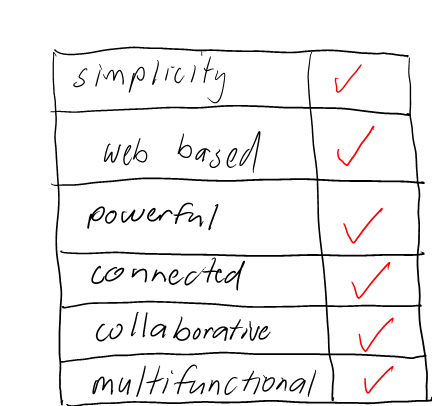
Came across this from an oz/nz online meeting and think it ticks the right boxes.

My real respect for this comes from the lack of barriers to entry. This is a video conferencing space

that allows people to video chat with up to 8 participants and chat with upto 100 others. I tried to join a couple of rooms that were on Iran and the election. There was no one in them and I guess that shows that purpose is required and that we need a tinychat only when we need a chat. So when do we need one.

  • When the people are far away and we know them but can’t be with them.
  • When we are co-constructing a topic, event or experience
  • When we are wanting feedback form an unbiased and neutral
  • When creating home school partnership
  • If we believe there is some extra learning and competencies being created as a result


Wednesday, June 17, 2009

Tomorrow is a big day

Extracts from what I want to say about the need for open access fibre networks to connect learners, learning organisations the world over.

I was unable to attend the first planning meeting of the group who have organised this event but have since understood the brief given for this part of the day’s programme to be look at Wow technology .

I was somewhat uncomfortable about this at first because afterall we were to address school principals. People who have had technology pitched to them over along period of time. Often we have shown you the big picture, the future, nirvana, the promised land of technology. And the education landscape is littered with failed promises, the unused and the past its use by date. We all know there are some realities around education that have not always worked in well with life on bleeding edge of technology. 

So before we consider wow factor I think it is important to look to look at the future through rose tinted glasses, through binoculars and under the microscope. We will not be able to do this in the timeframe of one day or meeting but what we may be able to consider is relationship of network connectivity to what we are trying to achieve as learning organisations. This will add to our ability to move towards a preferred future rather than the default one.

Connectivity is at the heart of this meeting and we will briefly outline the different types of network connection people are using to be part of the internet.

image

In terms of wow technology we have chosen a video conference and matched its participants to further discussion the potential of learning over networks.

This we hope will give a working example of the capacity of fibre optic bandwidth unachievable without such a connection.

We will look at what one New Zealand Council believes about the need for open access fibre networks.

image

What is happening with infrastructure

A student starting school today if attending till year 13 will leave in 2022.

image

From Ian Jukes


In Broad Sweeping Generalisations

We are increasing the number of devices because of

  • Weight
  • Cost
  • Battery life
  • Reliability
  • Connectivity
  • Functionality
  • Value of the network to which they connect

The implications are

  • We need either greater simplicity/reliability of equipment or greater technical support
  • Increased device density requires better internal networks especially wireless
  • Learners create more as well as consume
  • School/community partnerships and
  • anytime anywhere anyhow learning grows
  • Much of this relates our new curriculum whose vision is “for young people who are confident, connected, actively involved lifelong learners.”
  • And this relates perfectly to networks and connections.

image

I hope it goes well tomorrow.


Sunday, June 14, 2009

Are We connected ?

Well is being connected becoming increasingly important and contributing to learning. Here in New Zealand the vision of the new curriculum is

“for young people who are confident, connected, actively involved lifelong learners.”

What we get from connectivity is an opportunity to talk with others, participate and be heard in ways that weren’t possible. I was reading the newspaper the other day a story about a woman whose partner is working overseas. They have a Skype conversation every morning and night. They do not feel separated.

When learners connect something happens too.

We have a meeting this Thursday of local school Principals talking about the possibility of connecting up to a local fibre service. I hope this will bring about more understanding of connectivity. I would like to have some reflections from around the world about when they feel/have felt connected and whether this matters. Click on either of the pictures to add your thoughts to when and why we are connected. If you don’t feel like writing just a name and where you are from will be fine.

when why


Thursday, May 28, 2009

Assurance and why assessment is a bad word

Are we still focused on the assessment of reading age and other quantitative measures in New Zealand? Here is an explanation of what the “six year net” does. For those overseas the six year net looks at reading for six year olds and traditionally provided an opportunity for those struggling to enter a reading recovery programme. This is still the case today. From ministry sources

"What is the 6-year old net?
 The 6-year old net is a literacy test carried out with each student when they turn six years old. It measures a student's knowledge and understanding of letter identification, how much they know about how books, text and pictures work, basic word recognition and how many words the students can write in 10 minutes dictation."

We do need to assess how students are going in literacy and numeracy to understand where they are at and to attempt to place the learner in a place where they can read to learn rather than learn to read.This also provides some meaningful data and attempts to identify students who may struggle to have the literacy skills to personalise their learning.

These assessments are what we know how to do are they not.

But

I wonder if these will help achieve learning needs?

What are they?  the national academy of engineering even see to “advance personalised learning” in the top 14 challenges of the 21st Century

  • Make solar energy affordable.
  • Provide energy from fusion.
  • Develop carbon sequestration methods.
  • Manage the nitrogen cycle.
  • Provide access to clean water.
  • Restore and improve urban infrastructure.  
  • Advance health informatics.
  • Engineer better medicines.
  • Reverse-engineer the brain.
  • Prevent nuclear terror.
  • Secure cyberspace.
  • Enhance virtual reality.
  • Advance personalized learning.
  • Engineer the tools for scientific discovery.

I wonder if existing assessments will assist our aspirations for personalising learning?

could we have

My life education net ????

It measures the students understanding of how contribute positively to their immediate family, friends and the wider community.

It measures the students keep themselves healthy and assist in the well being of those around them.

It looks at how many practical things the student can do and how their skills are helping to make the planet sustainable.


Have had this post in draft for a while and with little else in the pipeline time to let it rip.


Monday, May 18, 2009

Staying safe on Skype

I have Skype, my nieces have Skype, my daughter has Skype. Who doesn’t ?

One class I was working with talked about using a multi-participant chat as a backchannel much like twitter.
This is a good idea and one I intent to trial later this week with classes from three different schools

A parent however reminded me of the opportunity for an outsider to intrude on a chat or directly contact
students without their request. I order to deal with this students need to alter their privacy settings.
Perhaps the selections shown with red arrows are the most appropriate. In other countries the students would
be protected at school from this possibility of unwanted contact. I like the idea that we can help them learn to manage this themselves.

image


Saturday, May 9, 2009

Look out for Nerd Girl

Look out for Nerd Girl aka Kristine Kopelke.

I am going to see if we can get Nerd Girl to come to New Zealand. When I attend workshops presentations I see two main possibilities for them to be highly successful in changing my thinking practice or beliefs.

The first possible type of Professional Learning Success...

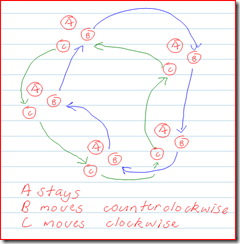
This is achieved by facilitating dialogues within a group where people share ideas reflect on big questions or are somehow active and learning by doing. There was great dialogue on the last day of MISC09 where participants rotated around the room with one member staying one going clockwise and one anti-clockwise. The questions presented were along the lines of

  1. What insight have you got from the first two days that resonates with you?
  2. What actions might you take on your return?
image

Why this professional learning works is likely because it addresses William Glasser survival understanding.

People feel empowered that they belong etc.

This is the type of professional learning that should be provided 80 % of the time. I hope facilitators understand this as a key understanding for working with learners.

image

The second possible type of Professional Learning success...

Is where the facilitator delivers their view point experiences and ideas in a more (sage on the stage style). For this to work I feel the presenter needs to use a unique lens (perspective) or reflection method to create something meaningful new and insightful for the audience.This second way is far more hit and miss: sometimes the presenter is delivering on a concept we don't understand, already understand or does so in a way that doesn't demonstrate originality or added value. Originality is about slight differences and comes from looking at something in a different way across disciplines and in exploration. This type of delivery will often lead to large differences in satisfaction between one audience member and another.

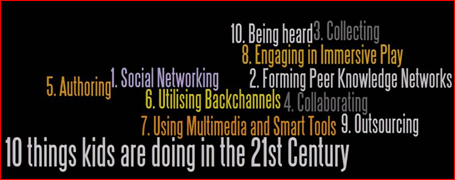
I thought Kristine was very good because her perspective was fresh yet logical: to look at what students are presently doing on the web as an insight into what we might get them to do and for what purpose.

What students were doing that struck a chord
image

If we are going to improve learning for students personalise learning and achieve higher potentials we need to pay heed to these ideas as mechanisms to assist students in our school environments.

The full presentation can be found here

Kristine Bluetoothed the presentation to a number of attendees flash enabled phones.

The application below will run on most Flash enabled mobile phones and can also be navigated through online by using the enter, arrow and number keys on the keyboard.


Right click here and select Save target as to download the app for your Flash enabled mobile phone or device.

To view the app here online, click on it with your mouse and then use the enter, arrow and number keys on your keyboard to navigate through the application.

Links for Kristine

Something that begins with play

Contact: Kristine Kopelke -

Tel: 5459 4590
Learning Innovation Centre Sunshine Coast
URL: http://www.earlyphaseicts.com

http://www.flashclassroom.com


Monday, April 27, 2009

Reason 1 Why we are moving to the cloud?

Who Wants to manage servers?

What's the purpose of managing these?

If they can't be accessed in anywhere anytime are they still of value?

The bubble share shows one medium sized schools infrastructure and we have invested many hours keeping this going.

Educational fibre loops and external providers should reduce this need.


We have moved 1 server from the rack which is the big hole at the bottom.


How do we escape? Step 1 google docs

BubbleShare: Share photos - Play some Online Games.