Showing posts with label learning. Show all posts

Thursday, August 26, 2010

Connected Schools – Six mths in

We have been working as a professional learning community for six months and we can see impact in the video below.

With the project comes regional goals and as leaders what I see as crucial now is:

  • Communication with other schools (newsletter coming)
  • Collaboration with others like the University and Polytechnic
  • Clear internal roles such as (organiser secondary voice)
  • Sharing of successes and failures (learning)
  • Strategic planning for sustainability and engagement
  • The creation of Reuseable and AAA (anytime ,anywhere, anyhow) material

Great to watch a lot being picked up from our community development day and being used by the students,
EBooks , Voicethread, numeracy interactives. This will make for engaged learners and improved learning outcomes.

Connected Schools Six Months in from Media team on Vimeo.

Hamilton Schools working together to create a professional learning community for themselves and other educators.


Wednesday, December 30, 2009

Letting kids learn

“The longer you wait for the future, the shorter it will be”

ThinkExist.com Quotations. “Loesje quotes”. ThinkExist.com Quotations Online 1 Nov. 2009. 28 Dec. 2009 <http://einstein/quotes/loesje/>

I had the opportunity to work with some students who were taking part in end of year examinations. Those who finished early (and in this case most did) were given the opportunity to do something quietly. I watched as they involved themselves in a number independent activities. I took some photos on my mobile which are here in the slideshow. I reminded me of books we used to have like 100 things to make and do. I feel that this sort of activity, scaffolded and enhanced, has the ability to increase the potential of our student’s

literacy/numeracy/operacy .

Have a look at the slideshow (just eight pictures) and I will explain what I mean.

The only instruction given was that the activity had to be silent while others were working on their exams. We have looked at and developed a framework for learning at Southwell where I teach. I highlighted the values and key competencies personal learning time similar to this might support. This is about “learning to learn” and putting the learner at the center of the learning. Accepting where our students are at and providing them with the tools for self improvement but how ….

image

Quality Assurance
Such a strategy as this independent learning time is now possible to develop and support through the use of ICT tools. I believe the key characteristics of this might be. This is the big disclaimer

  • Classroom Climate - Supportive classroom communities where learning modeled shared celebrated etc.
  • Reflection/expression/evidence/collaboration portals ie social networks, eportfolios (for lack of better word), gallery spaces, video repositories etc
  • Clear goal setting and articulation for learning perhaps SMART Students are asked to check off whether the goal is specific, measurable, action-oriented, reasonable and timely. This could be as simple as What is the purpose of this learning? What will represent success for me? What have I/we done so far? What do I/we plan to do next? with this information in a web environment peers and others can be used to motivate guide learners through this.
  • Formative community assessment – embedded teacher,peer and whole class feedback/feedforward
  • Time availability for learning to take place – this could be small pockets of time after say maths in an primary/elementary environment as we know that the brain need less intensive work in order for the neural pathways to become entrenched see syn-aps. It could also be represented in a more flexible programme where teachers facilitate learning with significant online support and individual access to personal learning.
  • Exemplars, evidence – Examples of tall poppies – growing poppies and aspiring poppies give students a clear direction.
  • 1 to 1 Access - to the connectivity, networks, creation tools and appropriate physical spaces and resources.

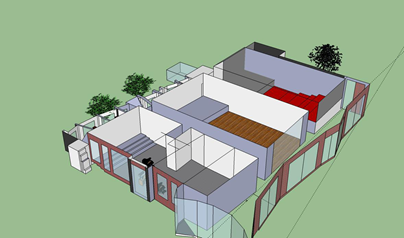
The place of personal learning can find its feet and show its evidence. I will finish with a building created in google sketch up by a year 7 students and a link to an online novel written by my son Jack (16) both examples of personal learning and endeavour.

pac2

image

image


Tuesday, October 20, 2009

Googlewave don’t believe the hype?

Google have many of us waiting to find out what wave is and what it might mean for us. Having had a bit of a read around the place and not having an invite myself I became interested. Rather than add yet another review the connections I looked at showed something new and powerful The you tube example is a realtime dialogue with translation. Below this in the iframe is Daniel Tenners take on what Google wave is and isn't for the full page is found here. Personally I think this is going to be big for collaboration and that connectivity is going to be the big delivery point for personal learning in online connected real time environment like google docs etherpad and google wave.


Ride the wave if you have trouble reading the frame below Daniels website is only a click away


Tuesday, October 13, 2009

Reality Check - Digital Story

We had a look at digital stories and how to make them with students at Southwell School. No matter what, it is important to hand over the learning to the students. Well ... here are some results. No success criteria in this first attempt was laid out but we talked about copyright, tone, static images etc. The students were self motivated by the chance to work in the digital environment and to apply learning to this media genre and format.


There is some strong story telling and visual language with the voice coming through in the Siberia story strongly. We would love some feedback and a quick comment would be appreciated by the students.


Wednesday, October 7, 2009

It's now and it's social if we let it

Missed the start of DK from mediasnackers workshop and came into with history of social interaction on the internet and then the Mobile/social learning onslaught.
Why are phones unwanted in schools? I am thinking especially camera in our school environment.
What about Kindy? See the 1 year old below

DK had an interesting digital story created by people writing on a4 and holding up their message and taking a picture
of it with the writer in the frame. .

My similar ideas for content

  • What are the issues in our school?
  • What helps you learn?
  • I learn best when
  • The book character was
  • How does bullying effect people
  • How does encouragement help you
  • Also single frame digital story telling could come from these cameras
  • sustainability messages
  • Safety messages
  • Poems
  • Emotional responses
  • Love more in comments below What do you think?

Milton Keynes youth service created the message below

This is simple but effective somehow knowing that the word was someone's makes it more powerful.

The second most popular reason youth use the web is Learning.
From the web makes me feel … This site collects and reflects on the results gathered from one ok DK's web interaction points.

image

I really liked this reflection on twitter

image 

“Twitter not about contacting people about finding out about stuff”

DK was talking alot about the way things just are. You can use hash tags as a stream of information in twitter so why wouldn't you? it just is.
Very pragmatic I thought lets look at reality and what we can use around us. Simple tools and social networks.

As a 44 year old the infographic below made me feel so good I had won a competition that doesn't exist.
What do the baby boomers do in social media?

image

nimage 

Link to Media Snackers is found above. DK is very open and inviting
jumps straight to honorary kiwi status in my book.
DK


Friday, September 25, 2009

Reading the right thing

image

This maybe what happens when people read this blog post. If not it probably because
we have chosen to or are seeking to learn about text vs visual language
through an emotional connection.
If from our perspective this is meaningful to us our brain will store it. I see visual information as more inately engaging.
Did the use of the red bold text get our attention? Is this a method of making the reading have more perceived benefit?

I plan to use visual text and prior reflection to help select what material, media, genre that students I work with will be exposed to.
Enthusiasm and engagement will need to be established before they start reading 
Even better if they are part of the selection process it may help to ensure they predict benefit.

.


Monday, September 14, 2009

Quizlet learn it and have fun

My son Jack is studying for NCEA Spanish. Being a geek and believing that a computer and the internet will solve all ills I looked to the web for a way through. I was amazed at how empty searches were when looking resources that would really help. I was taking part in an online meeting with 0ZNZ educators and by chance one of them specialises in modern Languages He had alot of ideas about learning using technology. His name is Joe Dale and his wiki is found at http://joedale.typepad.com/. Michael Fawcett a local blogger who I have alot of respect for was talking about what his daughter used as study tools and both confirmed the use of mp3s and flashcards as the major tools for exam preparation. I have started to work with these ideas and Jack has recommended Spanishdict.com. I have also come across Quizlet which is an online flashcard place. Between now and the end of the year Jack will put some of the NCEA vocab into Quizlet. I have embedded a match up below see how you get on.


Wednesday, August 19, 2009

Reality Check 3

Working with Year Eight students on Digital storytelling aspects the following is the sketch of what and how we will work.

Most important part I think In the Session

  1. work out what we know
  2. have clear learning intentions
  3. interact with each other
  4. try to allow cognitive rehearsal for thinking
  5. create new personal knowledge


From an earlier collaboration with another teacher

the following are the learning intentions

image

What is a digital story ? Look at three of these on these sites.

http://lc.celebrateoklahoma.us/

http://seein2it.wikispaces.com/Digital+Storytelling


Activity

Give 1 get 1. Move around the room give someone an idea about

What a digital story is ? and

  • Story like
  • Emotional
  • One person speaking
  • Transition of pictures
  • Similar to a movie
  • Pictures of what it is about
  • About a personal view of someone
  • Past tense
  • Music or Song
  • Pictures are still
  • Pictures and voice describing

What it Isn’t

  • A movie
  • Made up
  • Moving pictures
  • Voices out of pictures
  • Just all facts


Look at a factual survival story


http://en.wikipedia.org/wiki/Uruguayan_Air_Force_Flight_571#The_crash_and_rescue


Fact to fake narration

The students came up with these ideas

  • Good hook
  • Tense : generally Past/flashback. Present .Future
  • 1st person 3 rd Person
  • Ending in a question (keep people wondering)
  • Balancing fact and experience/emotions
  • Diary form
  • Suspense
  • Point of view

Read the article highlight important facts perhaps collect facts as a group. the article is too big and needs to be reduced if one session is used for whole activity.

Write this as a narration

Reflect at end what was good learning what wasn’t any comment you would like to make.


Wednesday, August 12, 2009

Googledocs a quick learn

We are starting to use google docs for our students

Why for those who are not sure?


Once we get over the wow look at this, look at that; we need to focus on how to improve learning.

Nick Rate has a good idea for writing the pic below links to his full post with examples.


highlighter

Colours could also be used to identify (multiple concurrent authors is powerful learning just ask Vygotsky)

  • ownership
  • parts of speech
  • editing process
  • thought process
  • de bonos thinking hats
  • perspectives
  • main ideas
  • disagreement
  • discussion points


This Google presentation has some other good ideas


I am working with some teachers on this tomorrow and it needs to be about teaching and learning

the good thing with google docs is I know it can be just that.


Monday, August 3, 2009

Te Mihi

Been working on my Mihi I have recorded it on utterli as well.

It felt good to find out where I come from and to be able to acknowledge

the Maori language and its part in our identity.

Taku                      Mihi Meaning                          
Ko David ahau I am David
Ko Ngati Tahu te iwi My tribe is Ngati Tahu from the South Island
Ko Rakeahua te awa Rakeahua is my River

Ko Rakeahua te Maunga

Rakeahua is my Mountain
Ko Alyn taku papa My father is Alyn
Ko Dorothy taku mama My Mother is Dorothy

They are both Dead now but their spirit is still with me

A good resource for this is here http://www.tki.org.nz/r/language/lls/wehi/units/unit14/index_e.php

Examples from Pt England school are here http://softwareforlearning.wikispaces.com/eStory2


Wednesday, July 29, 2009

Thank you Linda

image

Linda Woolhouse from Hamilton East School gave a well received numeracy workshop at our Cluster Development Day a couple of weeks back. The online resources are here with a description of what you will find.

Linda Says

These are a few sites I have stumbled across. Many can be played with a partner helping, supporting or just watching.

clip_image002

www.bbc.co.uk/schools/bitesize

Many, many areas to choose from. It’s a great website, fun, easy to play and able to be used independently. The games are quick so able to share a computer. At differing levels to add a greater challenge. Stage 1 is about up to our strategy stage 4, stage 2 is strategy stage 5 and beyond.

clip_image004

www.crickweb.co.uk/ks2numeracy.htmlclip_image006

A site more for Teachers with some activities for warm ups on the Interactive Whiteboard of data projector use. Look out for the interactive 100’s board and a calculator. Many activities are designed for above stage 4.

clip_image008

www.softschools.com/math/games/

A website that looks at practice equations across all domains for all levels. Refers to the activities, as ‘games’ but are equations to solve. Some games are timed for the students to compete against the clock.

clip_image010

www.visualfractions.com/

Nice format and simple practice activities.

clip_image012

www.kidsnumbers.com/

A whole range of games that model answers as well. Broken up into domains and going into Algebra, Fractions and Percentages. From Stage 1 upward.

clip_image014

www.tburg.k12.ny.us/mcdonald/mathfun.htm

Loads of games, huge variety using the 4 operations and testing the student’s basic facts knowledge. Leveled for interest and challenge.

clip_image016

www.counton.org/games/map-fractions/racing/

This has games, resources, news, and activities for all stages and an area for Junior students. It has games for 2 players.

clip_image018

www.uen.org/3-6interactives/

This has multiple games that link you to other game sites. Suitable for the higher stages. It has a high level of interest for older students. Games across all domains. Try the ‘Algebra vs. Cockroaches’, not easy.

clip_image020

www.oswego.org/ocsd-web/games/Mathmagician/cathymath.html

Simple basic facts speed tests. Students have a set amount of time to answer basic facts equations across the 4 operations. You can select level 1 or 2 and which operation you want to work on. Excellent for speed recall and practice.


Sunday, July 26, 2009

The Dog Woke Me, The Blog called Me

It’s 2.59 and the dog has come around to the front of the house and woken me. There have been a lot of thoughts in my head about blogging its relationship to learning and now am in front of the computer putting them down.


A New Zealand teacher posted some pictures of students running a cross country. The purpose of this was for parents to be able to see their children and the children to see themselves online. What followed was a series of opinions criticising the use images and names and implying the teacher should not be blogging because of lack of understanding of net safety and protocol. What a post on whaleoil's blog shows in my mind the need to prepare for comment or controversy where we least expect it.

Can we just grow up in public?

We engage in blogging to change our personal or community worlds. A post is out in the global domain may  be seen as a statement even if we don’t intend it to be. A process is taking place where we are often adjusting our thinking, forming opinions and learning.

  • What happens if we don’t follow protocol?
  • We say something that our schools for example don’t believe in?
  • What happens if we make a mistake?, Have a bad moment?
  • What happens if someone takes issue with what we have to say?
  • What are the risks if we are blogging at school as a classroom community?

Firstly I do not believe the greatest risks are from Stalkers or paedophiles as some would have us think. A photo and a student’s first name is a responsible risk. In New Zealand the ministry of education guidelines for inclusion of images is here. With parents permission there is no issue here.  The teacher posted some pictures of students running a cross country. The purpose of this was for parents to be able to see their children.The greatest risk I see with blogging are pedants and nitpickers.

image

To help survive this risk

  • find out about blogging from an experienced leader, doer and thinker such as Dorothy Burt
  • try to make sure our words make sense (not always a strong point of mine)
  • read other class blogs and online material
  • realise that our audience may not be who we think they are
  • care mostly about our preferred audience (the one we want to engage)
  • develop a thick skin i.e. accept that we may fail at first but that is not a bad thing
  • moderate comments if it is a class blog or students
  • think about the content of other online presences we may have and how they are linked eg facebook

Also realise the benefits of blogging

We can see blogging changing peoples personal worlds and creating


 image

Blogging should be innately positive because it is based on choice

With so many people choosing to express themselves there seems a good match to

William Glassers model of Survival. Are we blogging for Survival? I have used this model

a few times and acknowledge Joan Dalton and David Anderson who introduced me to it.

image

So keep up the blogging or start if you wish to.

For Me I am looking to Work out what it means for our school as a community this term.

There are some more thoughts here in a guide to educational blogging from Microsoft.

And a more comprehensive reflection http://learningweb2.wikispaces.com/Important+considerations


Sunday, July 19, 2009

Seeing is Believing

Sometimes somethings just are!
When we worked as a team investigating the use of games in education one of our
goals was.

To determine the best method of student involvement in the game that will maximise student learning .

We posed this question to teachers and students as well as videoing what happened when we got 100 students together for a big game day. The video is below What do you think?


Wednesday, June 17, 2009

Tomorrow is a big day

Extracts from what I want to say about the need for open access fibre networks to connect learners, learning organisations the world over.

I was unable to attend the first planning meeting of the group who have organised this event but have since understood the brief given for this part of the day’s programme to be look at Wow technology .

I was somewhat uncomfortable about this at first because afterall we were to address school principals. People who have had technology pitched to them over along period of time. Often we have shown you the big picture, the future, nirvana, the promised land of technology. And the education landscape is littered with failed promises, the unused and the past its use by date. We all know there are some realities around education that have not always worked in well with life on bleeding edge of technology. 

So before we consider wow factor I think it is important to look to look at the future through rose tinted glasses, through binoculars and under the microscope. We will not be able to do this in the timeframe of one day or meeting but what we may be able to consider is relationship of network connectivity to what we are trying to achieve as learning organisations. This will add to our ability to move towards a preferred future rather than the default one.

Connectivity is at the heart of this meeting and we will briefly outline the different types of network connection people are using to be part of the internet.

image

In terms of wow technology we have chosen a video conference and matched its participants to further discussion the potential of learning over networks.

This we hope will give a working example of the capacity of fibre optic bandwidth unachievable without such a connection.

We will look at what one New Zealand Council believes about the need for open access fibre networks.

image

What is happening with infrastructure

A student starting school today if attending till year 13 will leave in 2022.

image

From Ian Jukes


In Broad Sweeping Generalisations

We are increasing the number of devices because of

  • Weight
  • Cost
  • Battery life
  • Reliability
  • Connectivity
  • Functionality
  • Value of the network to which they connect

The implications are

  • We need either greater simplicity/reliability of equipment or greater technical support
  • Increased device density requires better internal networks especially wireless
  • Learners create more as well as consume
  • School/community partnerships and
  • anytime anywhere anyhow learning grows
  • Much of this relates our new curriculum whose vision is “for young people who are confident, connected, actively involved lifelong learners.”
  • And this relates perfectly to networks and connections.

image

I hope it goes well tomorrow.


Sunday, June 14, 2009

Are We connected ?

Well is being connected becoming increasingly important and contributing to learning. Here in New Zealand the vision of the new curriculum is

“for young people who are confident, connected, actively involved lifelong learners.”

What we get from connectivity is an opportunity to talk with others, participate and be heard in ways that weren’t possible. I was reading the newspaper the other day a story about a woman whose partner is working overseas. They have a Skype conversation every morning and night. They do not feel separated.

When learners connect something happens too.

We have a meeting this Thursday of local school Principals talking about the possibility of connecting up to a local fibre service. I hope this will bring about more understanding of connectivity. I would like to have some reflections from around the world about when they feel/have felt connected and whether this matters. Click on either of the pictures to add your thoughts to when and why we are connected. If you don’t feel like writing just a name and where you are from will be fine.

when why


Thursday, May 28, 2009

Assurance and why assessment is a bad word

Are we still focused on the assessment of reading age and other quantitative measures in New Zealand? Here is an explanation of what the “six year net” does. For those overseas the six year net looks at reading for six year olds and traditionally provided an opportunity for those struggling to enter a reading recovery programme. This is still the case today. From ministry sources

"What is the 6-year old net?
 The 6-year old net is a literacy test carried out with each student when they turn six years old. It measures a student's knowledge and understanding of letter identification, how much they know about how books, text and pictures work, basic word recognition and how many words the students can write in 10 minutes dictation."

We do need to assess how students are going in literacy and numeracy to understand where they are at and to attempt to place the learner in a place where they can read to learn rather than learn to read.This also provides some meaningful data and attempts to identify students who may struggle to have the literacy skills to personalise their learning.

These assessments are what we know how to do are they not.

But

I wonder if these will help achieve learning needs?

What are they?  the national academy of engineering even see to “advance personalised learning” in the top 14 challenges of the 21st Century

  • Make solar energy affordable.
  • Provide energy from fusion.
  • Develop carbon sequestration methods.
  • Manage the nitrogen cycle.
  • Provide access to clean water.
  • Restore and improve urban infrastructure.  
  • Advance health informatics.
  • Engineer better medicines.
  • Reverse-engineer the brain.
  • Prevent nuclear terror.
  • Secure cyberspace.
  • Enhance virtual reality.
  • Advance personalized learning.
  • Engineer the tools for scientific discovery.

I wonder if existing assessments will assist our aspirations for personalising learning?

could we have

My life education net ????

It measures the students understanding of how contribute positively to their immediate family, friends and the wider community.

It measures the students keep themselves healthy and assist in the well being of those around them.

It looks at how many practical things the student can do and how their skills are helping to make the planet sustainable.


Have had this post in draft for a while and with little else in the pipeline time to let it rip.


Monday, May 18, 2009

Staying safe on Skype

I have Skype, my nieces have Skype, my daughter has Skype. Who doesn’t ?

One class I was working with talked about using a multi-participant chat as a backchannel much like twitter.
This is a good idea and one I intent to trial later this week with classes from three different schools

A parent however reminded me of the opportunity for an outsider to intrude on a chat or directly contact
students without their request. I order to deal with this students need to alter their privacy settings.
Perhaps the selections shown with red arrows are the most appropriate. In other countries the students would
be protected at school from this possibility of unwanted contact. I like the idea that we can help them learn to manage this themselves.

image


Saturday, May 9, 2009

Look out for Nerd Girl

Look out for Nerd Girl aka Kristine Kopelke.

I am going to see if we can get Nerd Girl to come to New Zealand. When I attend workshops presentations I see two main possibilities for them to be highly successful in changing my thinking practice or beliefs.

The first possible type of Professional Learning Success...

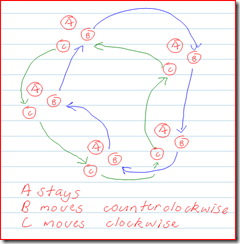
This is achieved by facilitating dialogues within a group where people share ideas reflect on big questions or are somehow active and learning by doing. There was great dialogue on the last day of MISC09 where participants rotated around the room with one member staying one going clockwise and one anti-clockwise. The questions presented were along the lines of

  1. What insight have you got from the first two days that resonates with you?
  2. What actions might you take on your return?
image

Why this professional learning works is likely because it addresses William Glasser survival understanding.

People feel empowered that they belong etc.

This is the type of professional learning that should be provided 80 % of the time. I hope facilitators understand this as a key understanding for working with learners.

image

The second possible type of Professional Learning success...

Is where the facilitator delivers their view point experiences and ideas in a more (sage on the stage style). For this to work I feel the presenter needs to use a unique lens (perspective) or reflection method to create something meaningful new and insightful for the audience.This second way is far more hit and miss: sometimes the presenter is delivering on a concept we don't understand, already understand or does so in a way that doesn't demonstrate originality or added value. Originality is about slight differences and comes from looking at something in a different way across disciplines and in exploration. This type of delivery will often lead to large differences in satisfaction between one audience member and another.

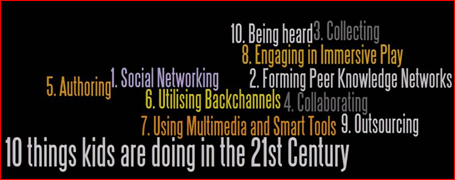
I thought Kristine was very good because her perspective was fresh yet logical: to look at what students are presently doing on the web as an insight into what we might get them to do and for what purpose.

What students were doing that struck a chord
image

If we are going to improve learning for students personalise learning and achieve higher potentials we need to pay heed to these ideas as mechanisms to assist students in our school environments.

The full presentation can be found here

Kristine Bluetoothed the presentation to a number of attendees flash enabled phones.

The application below will run on most Flash enabled mobile phones and can also be navigated through online by using the enter, arrow and number keys on the keyboard.


Right click here and select Save target as to download the app for your Flash enabled mobile phone or device.

To view the app here online, click on it with your mouse and then use the enter, arrow and number keys on your keyboard to navigate through the application.

Links for Kristine

Something that begins with play

Contact: Kristine Kopelke -

Tel: 5459 4590
Learning Innovation Centre Sunshine Coast
URL: http://www.earlyphaseicts.com

http://www.flashclassroom.com


Sunday, April 26, 2009

Increasing intelligence

I have always been interested the idea of developing the gifted and wondered why we aren't all inventing creating and displaying understanding at a high level. I was optimistic that we were becoming smarter and smarter as inhabitants of the blue planet. A visit to the Waikato Museum made me reflect on this. The Da Vinci exhibition here in Hamilton showed this man who lived over 500 years ago and did so much for us, so much thinking and doing in one lifetime. While this man was an exception it would be good to think that we could all be capable of more. In a conversation with Mark Treadwell I remember him saying "the world is running out of smart people." We certainly have some challenges ahead of us and will need to maximise our smart people. Is this just a case of genetics? Royce Helm the headmaster of my school talks of "Intelligence is like a balloon which can be increased". Can we provide the conditions for increasing intelligence and still keep the benchmarkers happy? I think the answer is yes. The assessment process for basic literacy numeracy skills needs to provide information naturally so that we can take care of the basics with out spending huge effort to work out what these are. I share Suzie's dislike for league tables found in the linked post. If we are to increase our intelligence balloons education has to step up to the plate and take responsible risks some of these of the top of my head are

any webspiration user who want to collaborate in this diagram can email me and I will add them as authors.

On a final note in my mind we are definitely going to need help foster creativity to help us. Here is a reflection from a team of teachers at school as to what may effect the fostering of creativity

creativity


Sunday, March 15, 2009

Netbooks are go.

We are always looking for technologies that enable learning and engage learners. We have this year initiated a 1 to 1 netbook programme for year seven students. I have never been happier in my beliefs that connected students will learn better. A bold statement I know but the students learning is evident both in the classroom and out. We have had to extend access to our social networking site elgg with over 100 concurrent connections to the database. This is becoming the hub of literacy development (see Below) as the community kicks in. Here I see Metcalfe's law showing true in education only with a few subtle differences. Metcalfe's law states that "the value of a telecommunications network is proportional to the square of the number of connected users of the system" Well the same can be said for learning value as more people connect the more we can learn from each other. The students are also empowered by knowing the other people they see on their network. I will ask some of them questions about this next week but first need to get a list of network beliefs off my Chest. Please add to this via comments.

Network value and function depends on:

  • Number of people connected
  • A feeling of ownership
  • A feeling of engagement
  • Network having multiple links student-teacher, Teacher-teacher, student-student, student-parent etc
  • The ability of the network to support multiple concurrent connections which requires:
    • High density Wireless provision
    • High Speed internet provision
    • Access to appropriate learning and social networks
    • Anytime anywhere anyhow

Ownership and personalisation

The personalisation of the device comes from its size, connectivity and obviously belonging to the user. The photos I have taken around the school as I came across students and netbooks. All after class out of school.

Here We can see weekend engagement of students in the social network at Southwell School.

weekend