




Archive WordPress with HTTrack
2 months ago
I was at my computer when the noise that Skype makes when a message has arrived did its thing ie announced a message was there. It was from a student who I had worked with using Google Sketch up the year before his computer had a virus.
What impressed me was the language punctuation and genre that went into I have included the conversation below. The student is in year 5 and quite smart. What he managed to do was outsource his issue to me and get my advice to solve his virus issue. We need students who are able to work in this way because they are independent problem solvers. Note the last line of the conversation I even got thanks when the problem was solved.
These are the key competencies in action. Isn’t the action the best evidence of learning.
ThinkExist.com Quotations. “Loesje quotes”. ThinkExist.com Quotations Online 1 Nov. 2009. 28 Dec. 2009 <http://einstein/quotes/loesje/>
I had the opportunity to work with some students who were taking part in end of year examinations. Those who finished early (and in this case most did) were given the opportunity to do something quietly. I watched as they involved themselves in a number independent activities. I took some photos on my mobile which are here in the slideshow. I reminded me of books we used to have like 100 things to make and do. I feel that this sort of activity, scaffolded and enhanced, has the ability to increase the potential of our student’s
The only instruction given was that the activity had to be silent while others were working on their exams. We have looked at and developed a framework for learning at Southwell where I teach. I highlighted the values and key competencies personal learning time similar to this might support. This is about “learning to learn” and putting the learner at the center of the learning. Accepting where our students are at and providing them with the tools for self improvement but how ….

Quality Assurance
Such a strategy as this independent learning time is now possible to develop and support through the use of ICT tools. I believe the key characteristics of this might be. This is the big disclaimer
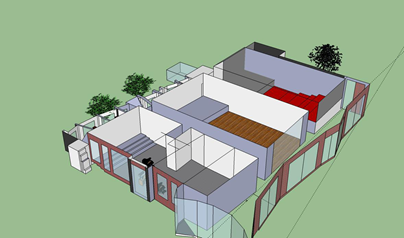
The place of personal learning can find its feet and show its evidence. I will finish with a building created in google sketch up by a year 7 students and a link to an online novel written by my son Jack (16) both examples of personal learning and endeavour.
I was at the Ulearn conference recently where several learners were talking about having a voice, being heard and saying what you think. In these times of change; debate and honesty are needed because the present reality is not the preferred future (the outcome of these debates will determine our direction into the unknown.)
In one workshop, on edupunk a discussion was raised suggesting that because of the danger of pornography and misuse students should not be allowed to have mobile devices in the learning environment. I found myself getting agitated while listening to someone outlining the issue who seemed incredibly reticent to allow mobile devices within the school system due to this risk. Mobile devices are ubiquitous and they are becoming “T H E M A J O R P E R S O N A L” connectivity mechanism.
There is much talk about schooling becoming irrelevant and while I think this is far from the case I would like to argue here that these risks may gain traction in an education system that doesn’t accept its role has changed and that an approach to internet safety must embrace change from within; utilising an ecological approach.


On a weekday 6 hours is the average time spent in school 18 are spent in the outside world. Sure there is the little matter of sleep and eating but the figure above speaks for itself. When we consider that access to learning technologies is probably greater outside of the school we have a curriculum of self direction. The options for good and bad, sustainable and unsustainable, moral and immoral, positive and negative, creative and consumerist are boundless outside of school. Students are learning more than ever outside of our gates. Our separation of the technological means used in the two environments is an untenable position in the long term and I propose - in the here and now. In waiting to be prepared we may lose our opportunity be part of the ecological development.
The Youth/Teens ie our Students have A participatory culture.
This participatory culture is “a culture with relatively low barriers to artistic expression and civic engagement, strong support
for creating and sharing one’s creations, and some type of informal mentorship whereby what
is known by the most experienced is passed along to novices.A participatory culture is also
one in which members believe their contributions matter, and feel some degree of social connection
with one another (at the least they care what other people think about what they have
created). Forms of participatory culture include:
Affiliations — memberships, formal and informal, in online communities centered
around various forms of media, such as Friendster, Facebook, message boards,
metagaming, game clans, or MySpace).
Expressions — producing new creative forms, such as digital sampling, skinning and
modding, fan videomaking, fan fiction writing, zines, mash-ups).
Collaborative Problem-solving — working together in teams, formal and informal,
to complete tasks and develop new knowledge (such as through Wikipedia, alternative
reality gaming, spoiling).
Circulations — Shaping the flow of media (such as podcasting, blogging).” taken from the confronting the challenges
report from the Mc Aurthur Foundation
| Confronting the Challenges of Participatory Culture: Media Education for the 21st Century |  |
The same report suggests the following and reading it helps me think what our preferred future might be:
“Rather than dealing with each technology in isolation, we would do better to take an ecological
approach, thinking about the interrelationship among all of these different communication
technologies, the cultural communities that grow up around them, and the activities they support.”
My Beliefs are that given the cultural communities that exist for young people are so connected they have the potential to bypass and ignore a formal education system.
Our steps towards a preferable future
What this does not mean
This does not mean that learners can have whatever content they like on their phones etc but rather that we understand we will maximise both learning and shared values through adopting acceptable use based on http://www.utechtips.com/aup-driven-by-vision-not-protection/
Missed the start of DK from mediasnackers workshop and came into with history of social interaction on the internet and then the Mobile/social learning onslaught.
Why are phones unwanted in schools? I am thinking especially camera in our school environment.
What about Kindy? See the 1 year old below
DK had an interesting digital story created by people writing on a4 and holding up their message and taking a picture
of it with the writer in the frame. .
My similar ideas for content
Milton Keynes youth service created the message below
The second most popular reason youth use the web is Learning.
From the web makes me feel … This site collects and reflects on the results gathered from one ok DK's web interaction points.

I really liked this reflection on twitter

DK was talking alot about the way things just are. You can use hash tags as a stream of information in twitter so why wouldn't you? it just is.
Very pragmatic I thought lets look at reality and what we can use around us. Simple tools and social networks.
As a 44 year old the infographic below made me feel so good I had won a competition that doesn't exist.
What do the baby boomers do in social media?
n
Link to Media Snackers is found above. DK is very open and inviting
jumps straight to honorary kiwi status in my book.

Fiona Grant based in School support services Auckland
Rochelle Jensen Waikato University
Urls http://softwareforlearning.tki.org.nz/
http://softwareforlearning.wikispaces.com
Rochelle described the software for learning site as a
A new search engine is in development and usernames will be individualised and transferable so they can transfer from one school to another. CWA are to make it possible for learning management systems to authenticate so users will not have to enter passwords. This will make these alot more popular in my eyes.
My ideas from the workshop
The wikispace refers to the pedagogy behind this. This brings this closer to schools and looks ate their use in the classroom.
These stories are a good place to start for integration of learning objects into meaningful deep learning experiences.
The unit can already be started before the learning object is used. What happens when students think and apply past experiences to new situations. For example students who has looked at how dyed water is drawn into a plant. This is applied to the river context.
This can be watched at http://softwareforlearning.wikispaces.com/estory7
There was some great language of learning

Thoughts on what makes digital digital objects effective presented were
I’ll be back to

Thanks Rochelle and Fiona for providing examples of best practice in use of digistore.
We are starting to use google docs for our students
Why for those who are not sure?
Once we get over the wow look at this, look at that; we need to focus on how to improve learning.
Nick Rate has a good idea for writing the pic below links to his full post with examples.

Colours could also be used to identify (multiple concurrent authors is powerful learning just ask Vygotsky)
This Google presentation has some other good ideas
I am working with some teachers on this tomorrow and it needs to be about teaching and learning
the good thing with google docs is I know it can be just that.
It’s 2.59 and the dog has come around to the front of the house and woken me. There have been a lot of thoughts in my head about blogging its relationship to learning and now am in front of the computer putting them down.
A New Zealand teacher posted some pictures of students running a cross country. The purpose of this was for parents to be able to see their children and the children to see themselves online. What followed was a series of opinions criticising the use images and names and implying the teacher should not be blogging because of lack of understanding of net safety and protocol. What a post on whaleoil's blog shows in my mind the need to prepare for comment or controversy where we least expect it.
Can we just grow up in public?
We engage in blogging to change our personal or community worlds. A post is out in the global domain may be seen as a statement even if we don’t intend it to be. A process is taking place where we are often adjusting our thinking, forming opinions and learning.
Firstly I do not believe the greatest risks are from Stalkers or paedophiles as some would have us think. A photo and a student’s first name is a responsible risk. In New Zealand the ministry of education guidelines for inclusion of images is here. With parents permission there is no issue here. The teacher posted some pictures of students running a cross country. The purpose of this was for parents to be able to see their children.The greatest risk I see with blogging are pedants and nitpickers.

To help survive this risk
Also realise the benefits of blogging
We can see blogging changing peoples personal worlds and creating

Blogging should be innately positive because it is based on choice
With so many people choosing to express themselves there seems a good match to
William Glassers model of Survival. Are we blogging for Survival? I have used this model
a few times and acknowledge Joan Dalton and David Anderson who introduced me to it.

So keep up the blogging or start if you wish to.
For Me I am looking to Work out what it means for our school as a community this term.
There are some more thoughts here in a guide to educational blogging from Microsoft.
And a more comprehensive reflection http://learningweb2.wikispaces.com/Important+considerations
We had 100 students in the last week of term working face to face in teams with people they had never met until the day of collaboration.
They were playing a game called Viva piñata as part of a Microsoft innovative Schools Project. Below is a wordle of what they added for plus into a PMI (plus minus interesting) of the effect the project has had on learning. The other “etherpads” are available here. The oral communication, group work and interdependence were what impressed me most with the learning that took place. The project has exceeded our expectations in terms of engagement and the development of key competencies.

I was also hoping that the online publishing and purpose for writing would lead to self editing
and the audience of peers encourage a high standard of written work. I still believe this to be achievable. Many
blog posts showed articulate well thought out ideas and adherence to language and genre conventions.
Some postings had a rushed compliance feeling. Perhaps some writers were content with their visual and oral collaborations and were reticent to put effort into constructing the web presence of blog posting.
Have a look here for the students’ writing or in the iframe below for a sample.
Well is being connected becoming increasingly important and contributing to learning. Here in New Zealand the vision of the new curriculum is
What we get from connectivity is an opportunity to talk with others, participate and be heard in ways that weren’t possible. I was reading the newspaper the other day a story about a woman whose partner is working overseas. They have a Skype conversation every morning and night. They do not feel separated.
When learners connect something happens too.
We have a meeting this Thursday of local school Principals talking about the possibility of connecting up to a local fibre service. I hope this will bring about more understanding of connectivity. I would like to have some reflections from around the world about when they feel/have felt connected and whether this matters. Click on either of the pictures to add your thoughts to when and why we are connected. If you don’t feel like writing just a name and where you are from will be fine.
 |  |

I have always been interested the idea of developing the gifted and wondered why we aren't all inventing creating and displaying understanding at a high level. I was optimistic that we were becoming smarter and smarter as inhabitants of the blue planet. A visit to the Waikato Museum made me reflect on this. The Da Vinci exhibition here in Hamilton showed this man who lived over 500 years ago and did so much for us, so much thinking and doing in one lifetime. While this man was an exception it would be good to think that we could all be capable of more. In a conversation with Mark Treadwell I remember him saying "the world is running out of smart people." We certainly have some challenges ahead of us and will need to maximise our smart people. Is this just a case of genetics? Royce Helm the headmaster of my school talks of "Intelligence is like a balloon which can be increased". Can we provide the conditions for increasing intelligence and still keep the benchmarkers happy? I think the answer is yes. The assessment process for basic literacy numeracy skills needs to provide information naturally so that we can take care of the basics with out spending huge effort to work out what these are. I share Suzie's dislike for league tables found in the linked post. If we are to increase our intelligence balloons education has to step up to the plate and take responsible risks some of these of the top of my head are
any webspiration user who want to collaborate in this diagram can email me and I will add them as authors.
On a final note in my mind we are definitely going to need help foster creativity to help us. Here is a reflection from a team of teachers at school as to what may effect the fostering of creativity

Having re-read some of John Hattie's research about the teacher having the greatest effect on learning. It seems to be reinforced as I watch the teachers in the xbox colab project working with learners and running their classes. I recorded the video below with Jo Wilson asking questions of Geoff Booth. I see how this is reinforced. The use of xbox 360s is succeeding because of:

We are always looking for technologies that enable learning and engage learners. We have this year initiated a 1 to 1 netbook programme for year seven students. I have never been happier in my beliefs that connected students will learn better. A bold statement I know but the students learning is evident both in the classroom and out. We have had to extend access to our social networking site elgg with over 100 concurrent connections to the database. This is becoming the hub of literacy development (see Below) as the community kicks in. Here I see Metcalfe's law showing true in education only with a few subtle differences. Metcalfe's law states that "the value of a telecommunications network is proportional to the square of the number of connected users of the system" Well the same can be said for learning value as more people connect the more we can learn from each other. The students are also empowered by knowing the other people they see on their network. I will ask some of them questions about this next week but first need to get a list of network beliefs off my Chest. Please add to this via comments.
Network value and function depends on:
Ownership and personalisation
The personalisation of the device comes from its size, connectivity and obviously belonging to the user. The photos I have taken around the school as I came across students and netbooks. All after class out of school.

Here We can see weekend engagement of students in the social network at Southwell School.

Cheryl Doig workshop at 1@s 2009
What I thought after workshop.
Notes from Workshop
Looking at engagement and examples of it. Cheryl has as many ?s as answers. Students can feel different and isolated at school because they are away from technology.
Students working together create a living breathing work. Combining Skype and Google docs for example. My belief is that literacy and communications skills will thrive in this environment
We discussed "Is full student engagement needed for learning." Four of us thought no we can multi-task. There are assume potions on beliefs we have about oar students experience. These do not always play out look at Sally Boyd's research at NZCER. United Kingdom group has placed student involvement into sitting, crawling, walking and Running. National College of School Leadership http://www.thinkbeyond.co.nz/assets/documents/Doig_SelfMan.pdf
Kelly Hines has asked students to keep feeding back to her. showing the students you will follow up on things is important.
Strategy One
Use student feedback to find out positives and areas for change.

Strategy two
Build driving forces reduce inhibiting forces.
Cheryl's wet-paint wiki on
community engagement.
The video above shows Tim Bullock with a clear path to looking at the tablet with his students. The short reflections from students from another class helps us realise that the students have little real understanding of the potential of their devices and refer to uses they make of similar technology.
Jedd Bartlett in his blog
Points to a Jisc report that indicates there is more to ICT than natural use. “New report reveals the information needs of the researchers and learners of the future: The report by the CIBER research team at University College London claims that, although young people demonstrate an ease and familiarity with computers, they rely on the most basic search tools and do not possess the critical and analytical skills to asses the information that they find on the web…”
While addressing analytical skills I feel this reinforces my belief that outside of the teachable moment we need to still scaffold student learning with some clear learning design and intentions for the technology we are adapting more and more. The term "digital native" has been somewhat used as an abdication of reponsibilty for student learning. My feeling is we cannot merely hand over technology in the hope the students will work this out for themselves.
What can we do to improve this with students.(my initial thoughts)
Hey; is this web tool Flowgram the death of powerpoint? I think so.
Well with a half decent internet connection this program is very flexible and powerful.
Of course best practise always needs to be established and finally I have a tip for recording voice.
Determined to post. In the cloud ?
As microsoft schools agreement comes to a close do we jump onto the cloud in the
hope that we won't fall through?
Reality Check 1
I have always backed visual images and sound as great learning tools. There is more information in these than text. I am interested in what information and collaboration will develop with a group using text about Darfur compared with one using a Youtube video clip.
What Students produced from the thinking tool
I guess I am a believer in google.
But Why???
So what is so good about a google map, doc etc.
For me the same opportunity is consistent. Collaboration is my preferred learning style in this web environment. Creativity, added knowledge and personalisation make me feel as if I can serve some purpose.When we add and individualise a map we are adding knowledge value. As others add knowledge this increases further.


