




Archive WordPress with HTTrack
2 months ago
ThinkExist.com Quotations. “Loesje quotes”. ThinkExist.com Quotations Online 1 Nov. 2009. 28 Dec. 2009 <http://einstein/quotes/loesje/>
I had the opportunity to work with some students who were taking part in end of year examinations. Those who finished early (and in this case most did) were given the opportunity to do something quietly. I watched as they involved themselves in a number independent activities. I took some photos on my mobile which are here in the slideshow. I reminded me of books we used to have like 100 things to make and do. I feel that this sort of activity, scaffolded and enhanced, has the ability to increase the potential of our student’s
The only instruction given was that the activity had to be silent while others were working on their exams. We have looked at and developed a framework for learning at Southwell where I teach. I highlighted the values and key competencies personal learning time similar to this might support. This is about “learning to learn” and putting the learner at the center of the learning. Accepting where our students are at and providing them with the tools for self improvement but how ….

Quality Assurance
Such a strategy as this independent learning time is now possible to develop and support through the use of ICT tools. I believe the key characteristics of this might be. This is the big disclaimer
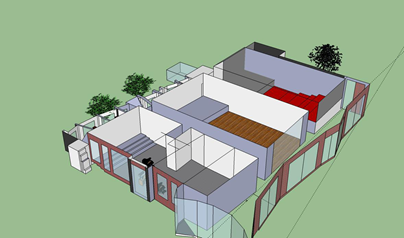
The place of personal learning can find its feet and show its evidence. I will finish with a building created in google sketch up by a year 7 students and a link to an online novel written by my son Jack (16) both examples of personal learning and endeavour.
Having re-read some of John Hattie's research about the teacher having the greatest effect on learning. It seems to be reinforced as I watch the teachers in the xbox colab project working with learners and running their classes. I recorded the video below with Jo Wilson asking questions of Geoff Booth. I see how this is reinforced. The use of xbox 360s is succeeding because of:

Mark Treadwell Talked about the Juniors ie Students aged 5 to 7 At the Learning at Schools conference last week in Rotorua. He was talking about the need to remove pressure from junior classrooms for everything but language. He mentioned that science for example should have no real objective beyond say being amazed by the world around us. This could be achieved by looking at some things though a microscope (perhaps one a day for a week) The mosquito wing below is a prime example. The main message I see is to reduce and simplify moving to essential knowings and concepts rather than skills and discrete objectives. What we need to be comfortable with is what do student really need to learn at age 6? What Can they Learn?
The following are my thoughts on where Junior Schools might fit into
learning pathways.
langauge
Oral
Have been working on a presentation for an upcoming conference.
This has been a reflection on 8 years of work in co-ordinating ICT
in a large New Zealand primary school. Probably the hardest infrastructure get
right is people. The more time I spend with technology the further I develop
my skills and comfort. Yet there are people who are yet to go online in any significant
manner or for any significant purpose.
As technologies become more reliant, powerful and ubiquitous those not on board
seem more conspicuous by their absence.
If we consider conceptual frameworks that
may provide a learning pathway for these people what might it be.


