Showing posts with label student voice. Show all posts

Thursday, September 16, 2010

Reality Check Inventions

The Students have designed some inventions and spoken about the on ustream.
I was impressed by the creativity that went into ideas such as the “ultimate hair brush”,
”The Magniball wall” and the “Super Alpaca feeding station”. The ability to adapt, change and think in different ways shows that young students are able to move from designing to inventing. Well done.

It takes bit of strength to get up in front of the camera. There is a pause for about 30 seconds while one student gets up the courage to show what they invented.


Wednesday, August 25, 2010

Digital Citizenship – a big ask

We have students with connectivity and a number of choices to make.
We can protect them to a certain extent and of course we do by filtering and
education B U T in the end we can only do so much ….

I have spoken to students about this and asked them to collaborate on a document where they are asked

What we think as students about digital citizenship.....
What the school should do about students who download age restricted material is ...
How the School should try to protect students from things on the internet is ...
Should the school lock down computers so that we can't install anything ? Why ? Why Not?
What we should be able to do with our computers is...
What we shouldn’t be able to do with our computers is...
Questions we have around digital citizenship are.

Will post back what this group thinks soon


Wednesday, June 2, 2010

How students advertise.


Sunday, May 16, 2010

Motivation

Daniel Pink talks about motivational aspects in his book Drive

Motivation requires three aspects

  • Real sense of purpose
  • Sense of Autonomy
  • Sense of potential Mastery in what they are attempting

It concerns me that sometimes we seem to focus on things we think they should know rather than what motivates them.
Dan’s talk on the subject has a lot to offer educators looking for improved student outcomes.

At the school where I work I heard some students who were working on a market day project the other day say to a teacher "I have never worked so hard before". The way the student said it was with immense pride. The project has obviously struck a chord and motivated students to learn and achieve.


Tuesday, April 27, 2010

Connected Kids Solve Problems

I was at my computer when the noise that Skype makes when a message has arrived did its thing ie announced a message was there. It was from a student who I had worked with using Google Sketch up the year before his computer had a virus.
What impressed me was the language punctuation and genre that went into I have included the conversation below. The student is in year 5 and quite smart. What he managed to do was outsource his issue to me and get my advice to solve his virus issue. We need students who are able to work in this way because they are independent problem solvers. Note the last line of the conversation I even got thanks when the problem was solved.

These are the key competencies in action. Isn’t the action the best evidence of learning.


skype_convo


Wednesday, December 30, 2009

Letting kids learn

“The longer you wait for the future, the shorter it will be”

ThinkExist.com Quotations. “Loesje quotes”. ThinkExist.com Quotations Online 1 Nov. 2009. 28 Dec. 2009 <http://einstein/quotes/loesje/>

I had the opportunity to work with some students who were taking part in end of year examinations. Those who finished early (and in this case most did) were given the opportunity to do something quietly. I watched as they involved themselves in a number independent activities. I took some photos on my mobile which are here in the slideshow. I reminded me of books we used to have like 100 things to make and do. I feel that this sort of activity, scaffolded and enhanced, has the ability to increase the potential of our student’s

literacy/numeracy/operacy .

Have a look at the slideshow (just eight pictures) and I will explain what I mean.

The only instruction given was that the activity had to be silent while others were working on their exams. We have looked at and developed a framework for learning at Southwell where I teach. I highlighted the values and key competencies personal learning time similar to this might support. This is about “learning to learn” and putting the learner at the center of the learning. Accepting where our students are at and providing them with the tools for self improvement but how ….

image

Quality Assurance
Such a strategy as this independent learning time is now possible to develop and support through the use of ICT tools. I believe the key characteristics of this might be. This is the big disclaimer

  • Classroom Climate - Supportive classroom communities where learning modeled shared celebrated etc.
  • Reflection/expression/evidence/collaboration portals ie social networks, eportfolios (for lack of better word), gallery spaces, video repositories etc
  • Clear goal setting and articulation for learning perhaps SMART Students are asked to check off whether the goal is specific, measurable, action-oriented, reasonable and timely. This could be as simple as What is the purpose of this learning? What will represent success for me? What have I/we done so far? What do I/we plan to do next? with this information in a web environment peers and others can be used to motivate guide learners through this.
  • Formative community assessment – embedded teacher,peer and whole class feedback/feedforward
  • Time availability for learning to take place – this could be small pockets of time after say maths in an primary/elementary environment as we know that the brain need less intensive work in order for the neural pathways to become entrenched see syn-aps. It could also be represented in a more flexible programme where teachers facilitate learning with significant online support and individual access to personal learning.
  • Exemplars, evidence – Examples of tall poppies – growing poppies and aspiring poppies give students a clear direction.
  • 1 to 1 Access - to the connectivity, networks, creation tools and appropriate physical spaces and resources.

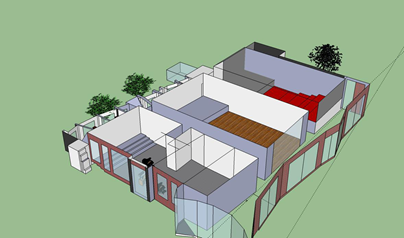
The place of personal learning can find its feet and show its evidence. I will finish with a building created in google sketch up by a year 7 students and a link to an online novel written by my son Jack (16) both examples of personal learning and endeavour.

pac2

image

image


Sunday, October 18, 2009

Looking for acceptable use with head in sand

I was at the Ulearn conference recently where several learners were talking about having a voice, being heard and saying what you think. In these times of change; debate and honesty are needed because the present reality is not the preferred future (the outcome of these debates will determine our direction into the unknown.)
In one workshop, on edupunk a discussion was raised suggesting that because of the danger of pornography and misuse students should not be allowed to have mobile devices in the learning environment. I found myself getting agitated while listening to someone outlining the issue who seemed incredibly reticent to allow mobile devices within the school system due to this risk. Mobile devices are ubiquitous and they are becoming “T H E  M A J O R  P E R S O N A L” connectivity mechanism.
There is much talk about schooling becoming irrelevant and while I think this is far from the case I would like to argue here that these risks may gain traction in an education system that doesn’t accept its role has changed and that an approach to internet safety must embrace change from within; utilising an ecological approach.

image image

image image

Engage or lose relevance

On a weekday 6 hours is the average time spent in school 18 are spent in the outside world. Sure there is the little matter of sleep and eating but the figure above speaks for itself. When we consider that access to learning technologies is probably greater outside of the school we have a curriculum of self direction. The options for good and bad, sustainable and unsustainable, moral and immoral, positive and negative, creative and consumerist are boundless outside of school. Students are learning more than ever outside of our gates. Our separation of the technological means used in the two environments is an untenable position in the long term and I propose - in the here and now. In waiting to be prepared we may lose our opportunity be part of the ecological development.

The Youth/Teens ie our Students have A participatory culture.

This participatory culture is “a culture with relatively low barriers to artistic expression and civic engagement, strong support
for creating and sharing one’s creations, and some type of informal mentorship whereby what
is known by the most experienced is passed along to novices.A participatory culture is also
one in which members believe their contributions matter, and feel some degree of social connection
with one another (at the least they care what other people think about what they have
created). Forms of participatory culture include:
Affiliations — memberships, formal and informal, in online communities centered
around various forms of media, such as Friendster, Facebook, message boards,
metagaming, game clans, or MySpace).
Expressions — producing new creative forms, such as digital sampling, skinning and
modding, fan videomaking, fan fiction writing, zines, mash-ups).
Collaborative Problem-solving — working together in teams, formal and informal,
to complete tasks and develop new knowledge (such as through Wikipedia, alternative
reality gaming, spoiling).
Circulations — Shaping the flow of media (such as podcasting, blogging).”  taken from the confronting the challenges
report from the Mc Aurthur Foundation

Confronting the Challenges
of Participatory Culture:
Media Education for the
21st Century

image

The same report suggests the following and reading it helps me think what our preferred future might be:

“Rather than dealing with each technology in isolation, we would do better to take an ecological
approach
, thinking about the interrelationship among all of these different communication
technologies, the cultural communities that grow up around them, and the activities they support.”

My Beliefs are that given the cultural communities that exist for young people are so connected they have the potential to bypass and ignore a formal education system.

Our steps towards a preferable future

  • Engage with students in the creation of an AUP that focuses on a vision for digital citizenry
  • Understand and explore what kids are doing in the 21st century
  • Help learners to learn from each other and from wider connections
  • Develop utility and understanding of the contribution points for connected mobile devices
  • Allow students to develop and explore suitable ethics and use
  • Provide faster cheaper safer (ie filtered but not stifled ) connectivity for mobile devices in our school
  • Learn ourselves
  • Accept new curriculum
  • Take risks (“the best way to predict the future is to make it”)

What this does not mean

This does not mean that learners can have whatever content they like on their phones etc but rather that we understand we will maximise both learning and shared values through adopting acceptable use based on http://www.utechtips.com/aup-driven-by-vision-not-protection/


Saturday, October 17, 2009

What Kids Are Doing - check 1 -

Kids are sophisticated media producers....

if we let them
if we let them share with each other
if we give them an audience

How do we lift their level even higher?


Tuesday, October 13, 2009

Reality Check - Digital Story

We had a look at digital stories and how to make them with students at Southwell School. No matter what, it is important to hand over the learning to the students. Well ... here are some results. No success criteria in this first attempt was laid out but we talked about copyright, tone, static images etc. The students were self motivated by the chance to work in the digital environment and to apply learning to this media genre and format.


There is some strong story telling and visual language with the voice coming through in the Siberia story strongly. We would love some feedback and a quick comment would be appreciated by the students.


Friday, September 25, 2009

Reading the right thing

image

This maybe what happens when people read this blog post. If not it probably because
we have chosen to or are seeking to learn about text vs visual language
through an emotional connection.
If from our perspective this is meaningful to us our brain will store it. I see visual information as more inately engaging.
Did the use of the red bold text get our attention? Is this a method of making the reading have more perceived benefit?

I plan to use visual text and prior reflection to help select what material, media, genre that students I work with will be exposed to.
Enthusiasm and engagement will need to be established before they start reading 
Even better if they are part of the selection process it may help to ensure they predict benefit.

.


Monday, September 21, 2009

Students View

What some students thought when asked if schools should go 1 to 1. They were also asked what they were proud of in their use of a Netbook. Interesting to me were that they all had different personal ideas on this and that their reasoning for why was based on sound ideas rather than the gadget factor.


Wednesday, August 19, 2009

Reality Check 3

Working with Year Eight students on Digital storytelling aspects the following is the sketch of what and how we will work.

Most important part I think In the Session

  1. work out what we know
  2. have clear learning intentions
  3. interact with each other
  4. try to allow cognitive rehearsal for thinking
  5. create new personal knowledge


From an earlier collaboration with another teacher

the following are the learning intentions

image

What is a digital story ? Look at three of these on these sites.

http://lc.celebrateoklahoma.us/

http://seein2it.wikispaces.com/Digital+Storytelling


Activity

Give 1 get 1. Move around the room give someone an idea about

What a digital story is ? and

  • Story like
  • Emotional
  • One person speaking
  • Transition of pictures
  • Similar to a movie
  • Pictures of what it is about
  • About a personal view of someone
  • Past tense
  • Music or Song
  • Pictures are still
  • Pictures and voice describing

What it Isn’t

  • A movie
  • Made up
  • Moving pictures
  • Voices out of pictures
  • Just all facts


Look at a factual survival story


http://en.wikipedia.org/wiki/Uruguayan_Air_Force_Flight_571#The_crash_and_rescue


Fact to fake narration

The students came up with these ideas

  • Good hook
  • Tense : generally Past/flashback. Present .Future
  • 1st person 3 rd Person
  • Ending in a question (keep people wondering)
  • Balancing fact and experience/emotions
  • Diary form
  • Suspense
  • Point of view

Read the article highlight important facts perhaps collect facts as a group. the article is too big and needs to be reduced if one session is used for whole activity.

Write this as a narration

Reflect at end what was good learning what wasn’t any comment you would like to make.


Monday, August 10, 2009

Easi-speak Guide

imageThere are some good introductions to the USB easi-speak microphone on

Lorraine’s and Dorothy’s blogs.

The following was recorded easy on the easi-speak

I think these are going to do great things for literacy where teachers cotton on to it


I have just copied some pics from the manual which is stored as a pdf on the

microphone itself. most of it is self evident but I have highlighted the bits I wasn’t sure of.


image

imageimage

image 

See you later I’m off to record some stuff add ideas for the mic’s use in comments if you like. Those of you at Southwell can borrow them from the ICT hub and I am happy to come and help out if you are interested.


Sunday, July 26, 2009

The Dog Woke Me, The Blog called Me

It’s 2.59 and the dog has come around to the front of the house and woken me. There have been a lot of thoughts in my head about blogging its relationship to learning and now am in front of the computer putting them down.


A New Zealand teacher posted some pictures of students running a cross country. The purpose of this was for parents to be able to see their children and the children to see themselves online. What followed was a series of opinions criticising the use images and names and implying the teacher should not be blogging because of lack of understanding of net safety and protocol. What a post on whaleoil's blog shows in my mind the need to prepare for comment or controversy where we least expect it.

Can we just grow up in public?

We engage in blogging to change our personal or community worlds. A post is out in the global domain may  be seen as a statement even if we don’t intend it to be. A process is taking place where we are often adjusting our thinking, forming opinions and learning.

  • What happens if we don’t follow protocol?
  • We say something that our schools for example don’t believe in?
  • What happens if we make a mistake?, Have a bad moment?
  • What happens if someone takes issue with what we have to say?
  • What are the risks if we are blogging at school as a classroom community?

Firstly I do not believe the greatest risks are from Stalkers or paedophiles as some would have us think. A photo and a student’s first name is a responsible risk. In New Zealand the ministry of education guidelines for inclusion of images is here. With parents permission there is no issue here.  The teacher posted some pictures of students running a cross country. The purpose of this was for parents to be able to see their children.The greatest risk I see with blogging are pedants and nitpickers.

image

To help survive this risk

  • find out about blogging from an experienced leader, doer and thinker such as Dorothy Burt
  • try to make sure our words make sense (not always a strong point of mine)
  • read other class blogs and online material
  • realise that our audience may not be who we think they are
  • care mostly about our preferred audience (the one we want to engage)
  • develop a thick skin i.e. accept that we may fail at first but that is not a bad thing
  • moderate comments if it is a class blog or students
  • think about the content of other online presences we may have and how they are linked eg facebook

Also realise the benefits of blogging

We can see blogging changing peoples personal worlds and creating


 image

Blogging should be innately positive because it is based on choice

With so many people choosing to express themselves there seems a good match to

William Glassers model of Survival. Are we blogging for Survival? I have used this model

a few times and acknowledge Joan Dalton and David Anderson who introduced me to it.

image

So keep up the blogging or start if you wish to.

For Me I am looking to Work out what it means for our school as a community this term.

There are some more thoughts here in a guide to educational blogging from Microsoft.

And a more comprehensive reflection http://learningweb2.wikispaces.com/Important+considerations


Thursday, July 9, 2009

Game playing changing learning

We had 100 students in the last week of term working face to face in teams with people they had never met until the day of collaboration.
They were playing a game called Viva piñata as part of a Microsoft innovative Schools Project. Below  is a wordle of what they added for plus into  a PMI (plus minus interesting) of the effect the project has had on learning. The other “etherpads” are available here. The oral communication, group work and interdependence were what impressed me most with the learning that took place. The project has exceeded our expectations in terms of engagement and the development of key competencies.


image

I was also hoping that the online publishing and purpose for writing would lead to self editing

and the audience of peers encourage a high standard of written work. I still believe this to be achievable.  Many

blog posts showed articulate well thought out ideas and adherence to language and genre conventions.

Some postings had a rushed compliance feeling. Perhaps some writers were content with their visual and oral collaborations and were reticent to put effort into constructing the web presence of blog posting.

Have a look here for the students’ writing or in the iframe below for a sample.


Thursday, May 28, 2009

Assurance and why assessment is a bad word

Are we still focused on the assessment of reading age and other quantitative measures in New Zealand? Here is an explanation of what the “six year net” does. For those overseas the six year net looks at reading for six year olds and traditionally provided an opportunity for those struggling to enter a reading recovery programme. This is still the case today. From ministry sources

"What is the 6-year old net?
 The 6-year old net is a literacy test carried out with each student when they turn six years old. It measures a student's knowledge and understanding of letter identification, how much they know about how books, text and pictures work, basic word recognition and how many words the students can write in 10 minutes dictation."

We do need to assess how students are going in literacy and numeracy to understand where they are at and to attempt to place the learner in a place where they can read to learn rather than learn to read.This also provides some meaningful data and attempts to identify students who may struggle to have the literacy skills to personalise their learning.

These assessments are what we know how to do are they not.

But

I wonder if these will help achieve learning needs?

What are they?  the national academy of engineering even see to “advance personalised learning” in the top 14 challenges of the 21st Century

  • Make solar energy affordable.
  • Provide energy from fusion.
  • Develop carbon sequestration methods.
  • Manage the nitrogen cycle.
  • Provide access to clean water.
  • Restore and improve urban infrastructure.  
  • Advance health informatics.
  • Engineer better medicines.
  • Reverse-engineer the brain.
  • Prevent nuclear terror.
  • Secure cyberspace.
  • Enhance virtual reality.
  • Advance personalized learning.
  • Engineer the tools for scientific discovery.

I wonder if existing assessments will assist our aspirations for personalising learning?

could we have

My life education net ????

It measures the students understanding of how contribute positively to their immediate family, friends and the wider community.

It measures the students keep themselves healthy and assist in the well being of those around them.

It looks at how many practical things the student can do and how their skills are helping to make the planet sustainable.


Have had this post in draft for a while and with little else in the pipeline time to let it rip.


Monday, May 18, 2009

Staying safe on Skype

I have Skype, my nieces have Skype, my daughter has Skype. Who doesn’t ?

One class I was working with talked about using a multi-participant chat as a backchannel much like twitter.
This is a good idea and one I intent to trial later this week with classes from three different schools

A parent however reminded me of the opportunity for an outsider to intrude on a chat or directly contact
students without their request. I order to deal with this students need to alter their privacy settings.
Perhaps the selections shown with red arrows are the most appropriate. In other countries the students would
be protected at school from this possibility of unwanted contact. I like the idea that we can help them learn to manage this themselves.

image


Saturday, May 9, 2009

Look out for Nerd Girl

Look out for Nerd Girl aka Kristine Kopelke.

I am going to see if we can get Nerd Girl to come to New Zealand. When I attend workshops presentations I see two main possibilities for them to be highly successful in changing my thinking practice or beliefs.

The first possible type of Professional Learning Success...

This is achieved by facilitating dialogues within a group where people share ideas reflect on big questions or are somehow active and learning by doing. There was great dialogue on the last day of MISC09 where participants rotated around the room with one member staying one going clockwise and one anti-clockwise. The questions presented were along the lines of

  1. What insight have you got from the first two days that resonates with you?
  2. What actions might you take on your return?

image

Why this professional learning works is likely because it addresses William Glasser survival understanding.

People feel empowered that they belong etc.

This is the type of professional learning that should be provided 80 % of the time. I hope facilitators understand this as a key understanding for working with learners.

image

The second possible type of Professional Learning success...

Is where the facilitator delivers their view point experiences and ideas in a more (sage on the stage style). For this to work I feel the presenter needs to use a unique lens (perspective) or reflection method to create something meaningful new and insightful for the audience.This second way is far more hit and miss: sometimes the presenter is delivering on a concept we don't understand, already understand or does so in a way that doesn't demonstrate originality or added value. Originality is about slight differences and comes from looking at something in a different way across disciplines and in exploration. This type of delivery will often lead to large differences in satisfaction between one audience member and another.

I thought Kristine was very good because her perspective was fresh yet logical: to look at what students are presently doing on the web as an insight into what we might get them to do and for what purpose.

What students were doing that struck a chord

image

If we are going to improve learning for students personalise learning and achieve higher potentials we need to pay heed to these ideas as mechanisms to assist students in our school environments.

The full presentation can be found here

Kristine Bluetoothed the presentation to a number of attendees flash enabled phones.

The application below will run on most Flash enabled mobile phones and can also be navigated through online by using the enter, arrow and number keys on the keyboard.


Right click here and select Save target as to download the app for your Flash enabled mobile phone or device.

To view the app here online, click on it with your mouse and then use the enter, arrow and number keys on your keyboard to navigate through the application.

Links for Kristine

Something that begins with play

Contact: Kristine Kopelke -

Tel: 5459 4590
Learning Innovation Centre Sunshine Coast
URL: http://www.earlyphaseicts.com

http://www.flashclassroom.com


Monday, March 23, 2009

Teachers are biggest effect

Having re-read some of John Hattie's research about the teacher having the greatest effect on learning. It seems to be reinforced as I watch the teachers in the xbox colab project working with learners and running their classes. I recorded the video below with Jo Wilson asking questions of Geoff Booth. I see how this is reinforced. The use of xbox 360s is succeeding because of:

  • clear instructional design
  • collaborative design
  • student voice
  • pursuit of key competencies
  • patience
  • research
  • organisation
  • feedback
  • emotional engagement


By the way the video was taken using my mobile phone a nokia n95 I am quite happy with the quality.


Sunday, March 1, 2009

Feedback to Change

Cheryl Doig workshop at 1@s 2009

What I thought after workshop.

    • Student feedback is important for improving practice
    • Co-constructed classrooms will be more co-operative
    • Norms establishment is critical to class establishment
    • This high level of student voice requires community support and awareness
    • Difficult students require management strategies beyond student voice eg community and school voice
    • If we ask for student voice we must acknowledge it and act react so that students are sure this has been heard
    • We are entitled not to agree with student voice.

Notes from Workshop

Looking at engagement and examples of it. Cheryl has as many ?s as answers. Students can feel different and isolated at school because they are away from technology.

Students working together create a living breathing work. Combining Skype and Google docs for example. My belief is that literacy and communications skills will thrive in this environment

We discussed "Is full student engagement needed for learning." Four of us thought no we can multi-task. There are assume potions on beliefs we have about oar students experience. These do not always play out look at Sally Boyd's research at NZCER. United Kingdom group has placed student involvement into sitting, crawling, walking and Running. National College of School Leadership http://www.thinkbeyond.co.nz/assets/documents/Doig_SelfMan.pdf

Kelly Hines has asked students to keep feeding back to her. showing the students you will follow up on things is important.

Strategy One

Use student feedback to find out positives and areas for change.

Capture

Strategy two

Build driving forces reduce inhibiting forces.

Capture2

Cheryl's wet-paint wiki on

community engagement.